Smart Financial Goals to Set for the New Year
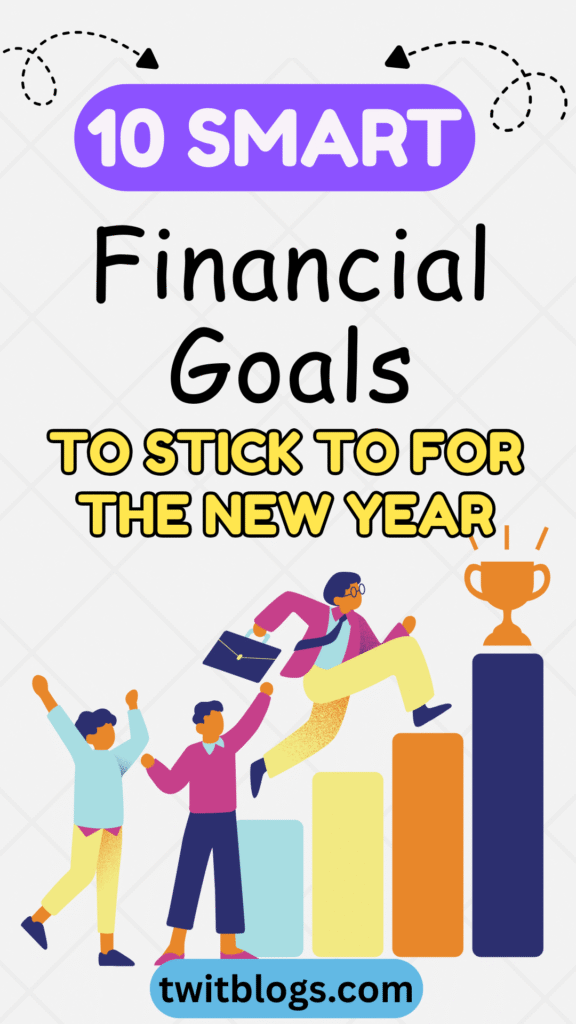
January 1st is coming. This year, let’s set money goals that don’t die by February. If you’re like most folks, you’ve made financial resolutions before—vague promises to “save more” or “spend less”—only to watch them fizzle out amid life’s chaos. But 2026 can be different. We’re talking smart financial goals for the new year: specific, measurable, achievable, relevant, and time-bound (SMART) targets that fit your life, whether you’re scraping by in your 20s, juggling kids and a mortgage, hustling mid-career, or eyeing retirement. These aren’t pie-in-the-sky dreams; they’re practical steps with dollar amounts, deadlines, and built-in wins to keep you motivated. I’ve been there—broke after college, buried in debt, and now financially free after grinding through my own goals. Let’s make this your year to build wealth that sticks.
Ditching the fluff, this guide gives you 10 ultra-practical goals, tailored for various income levels and life stages. Each one includes exact targets, why it’ll change your game, a step-by-step plan, and a simplified “if you only do one thing” option. Plus, we’ll cover how to pick your top three, track progress, and handle slip-ups gently. Ready? Let’s turn 2026 into your financial breakthrough.
1. Build (or Rebuild) Your $1,000 Emergency Fund by March 31
Exact dollar target and deadline: Stash $1,000 in a high-yield savings account by March 31, 2026. For low-income earners (under $40K/year), aim for $500; mid-income ($40K-80K), $1,000; higher ($80K+), scale to $2,000 if you have bigger fixed costs.
Why it matters + real-life payoff: Life throws curveballs—a flat tire, unexpected vet bill, or minor medical issue—and without this buffer, you’re swiping credit cards at 20% interest. Hitting this goal gives you peace of mind, reduces stress (studies show financial cushions lower anxiety by 30%), and prevents small setbacks from derailing bigger plans. In real life, it’s the difference between handling a $600 car repair in cash versus adding $150 in interest over months.
Step-by-step mini-plan:
- Open a free high-yield account (like Ally or Marcus by Goldman Sachs, earning 4-5% APY).
- Track your spending for one week to find $100-200 in quick cuts (e.g., skip takeout twice).
- Automate $50-100 transfers bi-weekly from your checking account.
- Sell unused stuff on Facebook Marketplace or eBay for a $200-500 boost.
- Use windfalls like tax refunds (average $3,000) to top off. Celebrate hitting it: Treat yourself to a $20 coffee date—guilt-free.
If you only do one thing: Cut one non-essential ($50/month) and auto-transfer it to savings starting January 1.
Missed January? No sweat—restart in February with a smaller weekly target to catch up.
2. Pay Off Your Smallest Debt (or the One That Annoys You Most)
Exact dollar target and deadline: Clear your smallest debt balance—say, $500-2,000—by June 30, 2026. Adjust by income: Low earners target $300-800; mid, $800-1,500; high, $1,500-3,000. Pick the annoying one if it’s not the smallest (e.g., that lingering store card).
Why it matters + real-life payoff: Lingering debts drain your energy and wallet with interest (average credit card rate: 24%). Knocking one out creates momentum—the “debt snowball” effect boosts motivation by 40%, per behavioral finance research. Payoff? More cash flow for fun or investing, plus a credit score bump (up to 30 points), making future loans cheaper.
Step-by-step mini-plan:
- List all debts with balances and rates.
- Allocate $100-300 extra monthly (find it by meal-prepping to save $150).
- Use apps like Undebt.it to track payments.
- Negotiate lower rates with creditors (call and ask—success rate: 70%).
- Roll the minimum payment into the next debt once cleared. Celebrate: Splurge on a $50 outing, like a movie night.
If you only do one thing: Add $50 extra to payments each month from a side gig like dog-walking.
Setbacks? If a month’s tight, pay minimums and double up next—progress over perfection.
3. Max Out Your Roth IRA or 401(k) Match — Even If You Start With $50/Paycheck
Exact dollar target and deadline: Contribute enough to get your full employer 401(k) match (average: 4-6% of salary, worth $2,000-5,000/year) or $7,000 to a Roth IRA by December 31, 2026. Low income: Start at $50/paycheck; mid: $100-200; high: Full max ($7,000 IRA or $23,000 401(k)).
Why it matters + real-life payoff: Free money from matches doubles your savings instantly, and tax advantages grow it exponentially (a $5,000 contribution could hit $50,000 in 30 years at 7% return). It’s retirement security—avoid being one of the 50% of Americans with under $10K saved. Payoff: Financial independence sooner, like retiring five years early.
Step-by-step mini-plan:
- Check your employer’s match details (HR portal or benefits guide).
- Increase contributions by 1% monthly until matched.
- Open a Roth IRA at Vanguard or Fidelity if no match.
- Use tax software to estimate refunds and invest them.
- Track via Mint or Personal Capital apps. Celebrate: Book a $100 spa day when you hit half.
If you only do one thing: Bump your 401(k) by 1% starting now—it’s pre-tax, so your take-home barely dips.
Slipped in Q1? Adjust in April post-tax season for a boost.
4. Create a Fully Funded 3–6 Month Emergency Fund in 2026
Exact dollar target and deadline: Save 3-6 months of expenses ($9,000-18,000 for $3,000/month costs) by December 31, 2026. Low income: 3 months ($3,000-6,000); mid: 4-5 months ($10,000-15,000); high: 6 months ($20,000+).
Why it matters + real-life payoff: Beyond the baby fund, this covers big hits like job loss (average unemployment: 5 months). It’s freedom—60% of people without one raid retirement accounts, paying penalties. Payoff: Sleep easy knowing you can weather storms without debt.
Step-by-step mini-plan:
- Calculate monthly expenses (rent, food, bills—use a spreadsheet).
- After goal #1, add $200-500/month to the same account.
- Cut big leaks (e.g., downgrade cable for $100 savings).
- Use bonuses or raises directly.
- Review quarterly to adjust. Celebrate: Weekend getaway under $200.
If you only do one thing: Auto-save 10% of every paycheck post-emergency basics.
Missed a quarter? Ramp up in the next—no judgment, just action.
5. Save for a Specific Big Goal (Vacation, House Down Payment, Wedding)
Exact dollar target and deadline: Save $5,000-20,000 for your chosen goal by December 31, 2026. Low income: $2,000-5,000 (weekend trip); mid: $5,000-10,000 (vacation); high: $10,000-20,000 (down payment).
Why it matters + real-life payoff: Vague saving flops; specifics motivate (psych studies: 70% success rate with targeted goals). It turns dreams real—like a debt-free wedding or home ownership boosting net worth by $200K over time.
Step-by-step mini-plan:
- Pick one: e.g., $8,000 Hawaii trip.
- Break into monthly targets ($667 for $8K).
- Open a labeled savings sub-account.
- Gig economy side hustle (e.g., TaskRabbit for $300/month).
- Visualize with a Pinterest board. Celebrate: Mini-version, like a local hike.
If you only do one thing: Name the goal and save $100/month toward it.
Setback? Scale down—$5K instead of $10K—and keep going.
6. Cut One “Money Leak” That Costs You $200+/Month
Exact dollar target and deadline: Eliminate a $200+ monthly expense (e.g., unused gym, dining out) by March 31, 2026, redirecting savings to goals.
Why it matters + real-life payoff: Leaks add up—$200/month is $2,400/year wasted. Cutting one frees cash for investing, growing to $10K in five years at 7%. Payoff: More disposable income without earning more.
Step-by-step mini-plan:
- Audit bank statements for leaks.
- Pick one: Cancel gym ($50), cook more ($150 savings).
- Replace cheaply (free YouTube workouts).
- Redirect via auto-transfer.
- Track savings monthly. Celebrate: Use first month’s savings for a treat.
If you only do one thing: Cancel one subscription and bank the cash.
Missed deadline? Pick an easier leak in April.
7. Increase Your Income by 10% (Exact Strategies That Work)
Exact dollar target and deadline: Boost earnings by 10% ($3,000-10,000/year extra) by September 30, 2026. Low: $2,000-4,000; mid: $4,000-8,000; high: $8,000+.
Why it matters + real-life payoff: Expenses rise; income must too. A 10% bump compounds—extra $5K/year invested grows to $100K in 20 years. Payoff: Faster goals, less stress.
Step-by-step mini-plan:
- Ask for raise (prep with achievements).
- Side hustle: Freelance on Upwork ($500/month).
- Skill up via free Coursera courses.
- Network on LinkedIn weekly.
- Track new income separately. Celebrate: Dinner out with the first extra paycheck.
If you only do one thing: Pitch one freelance gig monthly.
Setback? If no raise, switch jobs—market’s hot.
8. Automate Your Entire Money System So You Never Think Again
Exact dollar target and deadline: Set up full automation (bills, savings, investments) by February 28, 2026, saving $500-2,000/year in fees/interest.
Why it matters + real-life payoff: Manual management leads to misses (late fees average $30 each). Automation ensures consistency—users save 20% more. Payoff: Time freedom for life, not spreadsheets.
Step-by-step mini-plan:
- List all bills and due dates.
- Use bank auto-pay for everything.
- Set savings transfers post-payday.
- App like Acorns for round-ups ($100/year extra).
- Review bi-annually. Celebrate: Lazy Sunday off.
If you only do one thing: Auto-pay bills to avoid fees.
Missed? Do it piecemeal over weeks.
9. Review & Reduce Recurring Bills (Insurance, Subscriptions, Utilities)
Exact dollar target and deadline: Slash $100-500/month in bills by June 30, 2026.
Why it matters + real-life payoff: Bills creep up—average household overpays $400/year on insurance. Savings compound into thousands. Payoff: More for goals without sacrifice.
Step-by-step mini-plan:
- Gather statements.
- Shop insurance quotes (save $300/year).
- Cancel unused subs ($50/month).
- Energy audit for utilities ($100 savings).
- Negotiate (success: 80%). Celebrate: Use savings for a hobby item.
If you only do one thing: Switch one provider for $50 savings.
Setback? Re-review in fall.
10. Teach Your Kids (or Yourself) One New Money Skill Every Quarter
Exact dollar target and deadline: Master four skills in 2026 (one per quarter), with $0-500 investment (books/apps).
Why it matters + real-life payoff: Financial literacy boosts wealth by 20% lifetime. For families, it breaks cycles; solos build habits. Payoff: Confident kids or self avoiding pitfalls.
Step-by-step mini-plan:
- Q1: Budgeting app tutorial.
- Q2: Investing basics (free Khan Academy).
- Q3: Credit score management.
- Q4: Negotiation skills.
- Practice weekly. Celebrate: Family game night.
If you only do one thing: Read one money book quarterly.
Missed quarter? Double up next.

Bonus: Free Printable 2026 Financial Goals Tracker
Grab our free PDF tracker: Monthly progress bars for each goal, dollar trackers, and motivation quotes. Download at [your site]—print and pin it up for daily reminders.
How to Choose YOUR Top 3 Goals
Assess your stage: Broke 20s? Start with 1, 2, 7. Growing family? 4, 5, 10. Mid-career? 3, 6, 9. Pre-retirement? 3, 4, 8. Pick based on pain points—e.g., if debt bugs you, prioritize 2. Align with values: Fun-lover? Goal 5.
Quarterly Check-In Calendar
Mark your calendar: March 31 (review Q1), June 30 (Q2), September 30 (Q3), December 31 (full year). Spend 30 minutes adjusting—celebrate wins, tweak misses.
FAQs
- What are good financial goals for beginners? Start with #1 (emergency fund) and #6 (cut a leak)—they’re low-pressure wins.
- How do I stay motivated all year? Tie rewards to milestones and use apps for streaks.
- What if I’m in debt—should I save or pay off first? Build the $1K fund (#1), then tackle debt (#2).
- Are these goals realistic for low income? Yes—scale dollars down and focus on percentages.
- How do I track progress without overwhelm? Use one app like YNAB for everything.
- What if life changes mid-year? Adapt—e.g., pivot from vacation save to emergency if needed.
- Can I do these without a partner? Absolutely; solo folks often crush them faster.
- How much should I invest if I’m new? Start small (#3) and learn quarterly (#10).
Pick 3 goals right now. Write them down. You’ll thank yourself on December 31st. You’ve got the tools, the plan, and a friend in your corner—let’s make 2026 epic.