Is the Yuka App Legit? A Comprehensive 2026 Review
You’re standing in the grocery aisle, scanning a bag of chips with your phone. Seconds later, Yuka flashes a red “Bad” score and lists concerning additives. You put it back. But is the Yuka app actually trustworthy, or is it just another overhyped tool pushing fear over facts? In 2026, with over 78 million users worldwide and growing influence on food reformulation, the question “is the Yuka app legit” remains one of the most searched health-tech queries.
This article delivers a fair, evidence-based evaluation of the Yuka app in 2026. We’ll examine how it works, its accuracy and data sources, business model, privacy practices, real user experiences, potential red flags, and comparisons to competitors. By the end, you’ll have a clear, nuanced verdict to decide if it’s a reliable tool for healthier choices — or one to approach with healthy skepticism.
Yuka isn’t a medical advisor or nutritionist replacement. It’s a consumer empowerment app built on public data and scientific benchmarks. Here’s what the evidence shows after years of real-world use and industry impact.
What Is the Yuka App and How Does It Work?
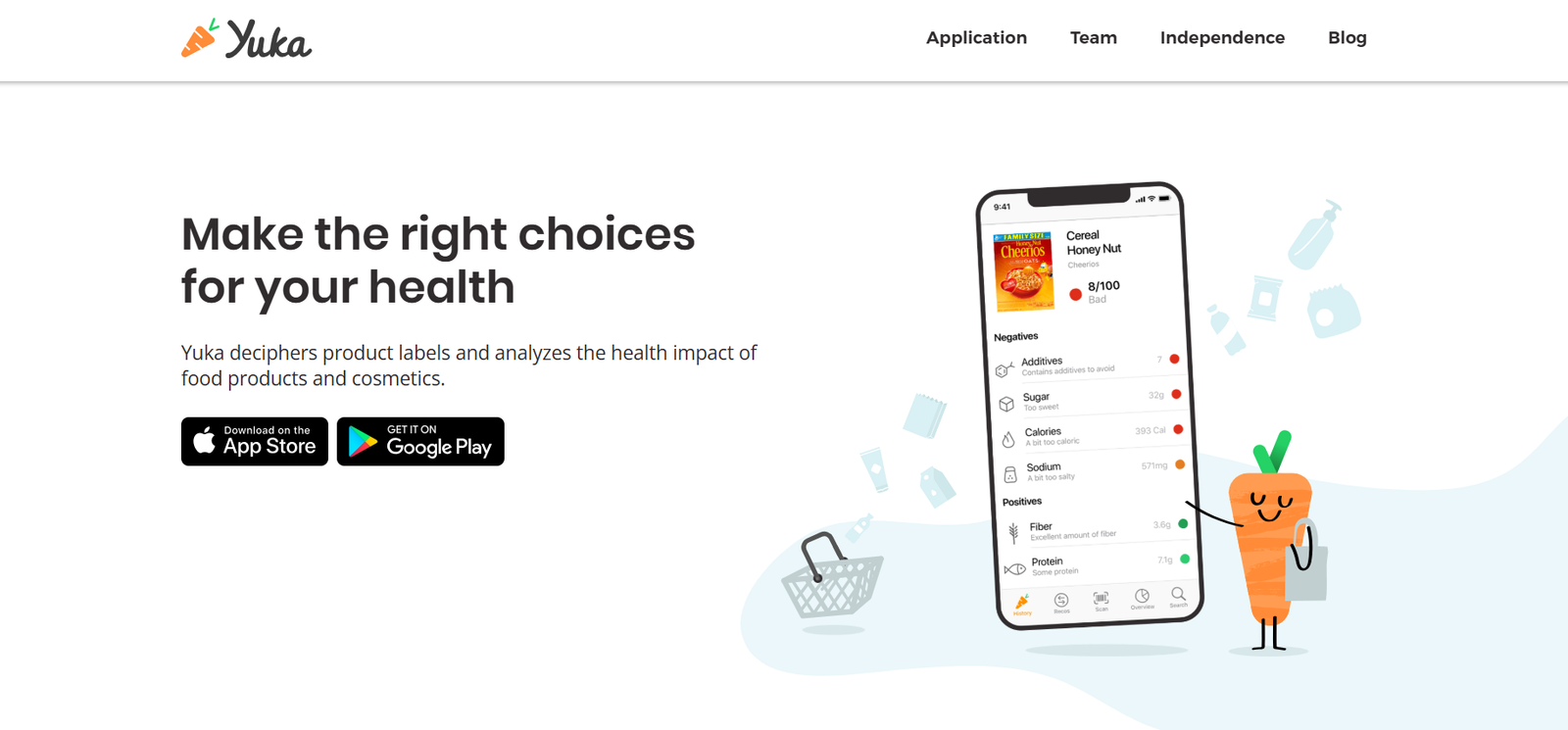
Launched in France in 2017 by a small independent team, Yuka is a free mobile app (iOS and Android) that lets users scan barcodes of food, beauty, and personal care products. It instantly delivers a health-impact score from 0 to 100, color-coded as Excellent (green), Good (yellow), Poor (orange), or Bad (red). The app now covers roughly 6 million products — about 4 million food items and 2 million cosmetics — across multiple countries, including a strong U.S. presence with 25 million American users as of late 2025.
The core experience is simple: point your camera at a barcode (or search manually in Premium). Yuka decodes the ingredients list using optical character recognition and cross-references its database. For food, it breaks down the score into positives (fiber, protein, fruits/vegetables) and negatives (sugar, salt, saturated fat, calories, additives). For cosmetics, it flags individual ingredient risks like potential carcinogens, endocrine disruptors, allergens, or irritants.
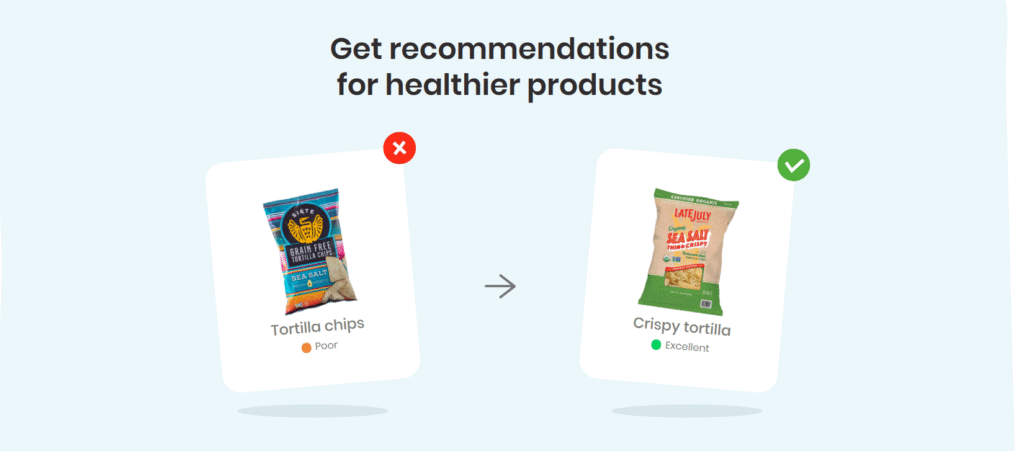
In 2026, key features include healthier-alternative recommendations, a “Brand Call-Out” tool that lets users email or post on social media about high-risk products, and user contributions to expand the database. The app emphasizes independence: no ads, no brand sponsorships, and no paid placements. Scanning is free, but advanced tools require a subscription.
Yuka positions itself as a transparency bridge in a world of confusing labels. It doesn’t claim to be perfect — it explicitly states it relies on product labels and public science — but its popularity stems from making complex information accessible in seconds.
How Does the Yuka App Score Products? Accuracy and Data Sources Explained
Yuka’s scoring isn’t arbitrary, but it’s also not infallible. For food products, the algorithm weights three factors:
- Nutritional quality (60%): Based directly on the Nutri-Score system, a science-backed European front-of-pack label endorsed by the WHO and adopted in seven countries. It evaluates per 100g: calories, sugar, sodium, saturated fats (negative points) versus protein, fiber, and fruits/vegetables (positive points). Nutri-Score translates to Yuka’s 0–100 scale.
- Additives (30%): Yuka maintains a risk catalog for over 500 additives, drawing from the latest research by the European Food Safety Authority (EFSA), International Agency for Research on Cancer (IARC), ANSES (French agency), and independent studies. Additives get color-coded risk levels: risk-free, limited, moderate, or high. A single high-risk additive caps the entire product below 50/100 — a precautionary approach.
- Organic dimension (10%): A bonus for certified organic labels (national or international). The rationale is reduced pesticide exposure, though critics note organic foods aren’t always nutritionally superior.
For cosmetics, scoring is ingredient-by-ingredient. Yuka analyzes against databases from the European Chemicals Agency (ECHA), U.S. Environmental Protection Agency (EPA), and peer-reviewed studies for risks like carcinogenicity, endocrine disruption, irritation, or pollution. No single “Nutri-Score” equivalent exists here; it’s a cumulative risk profile.
Data sources are transparent: official product labels, manufacturer submissions, user-contributed entries, and public scientific repositories. The database grows daily through crowdsourcing and brand uploads. However, accuracy depends on label currency — reformulations can lag behind the app by weeks or months.
Strengths: Consistent application of public benchmarks and strong correlation with Nutri-Score (a respected standard). In 2026, Yuka reports that high-risk additives per product have dropped 13% globally since 2019, partly due to consumer pressure it helped create.
Limitations: The system is precautionary and sometimes overly punitive. All additives get penalized to some degree, even those deemed safe in typical amounts by regulators. The organic bonus lacks robust nutritional evidence. Small database gaps or outdated entries exist, especially for U.S. private-label or niche products. Nutritionists often point out that Yuka ignores context — serving size, overall diet, or individual health needs — and can trigger unnecessary anxiety around “normal” foods.
Real-world tests (including dietitian reviews) show Yuka excels as a quick filter but falters as an absolute health authority. A 2025 analysis found occasional mismatches between app data and packaging due to user or manufacturer entry errors.
How Does Yuka Make Money? Business Model Breakdown
Yuka’s business model is refreshingly straightforward and transparent — a rarity in health tech. The company publicly publishes its balance sheet and revenue breakdown on its website.
Revenue comes almost entirely from optional Premium subscriptions (pay-what-you-can model, typically $10–$50 per year). Premium unlocks unlimited history, offline mode, advanced search (no scanning required), personalized alerts (e.g., gluten, palm oil, vegan), and dietary preference filters. In 2024, premium subscriptions generated approximately $7.17 million — over 98% of total revenue. Minor income comes from books, calendars, and services.
Crucially, no advertising, no brand partnerships, no paid placements. Brands cannot pay to improve scores or appear in recommendations. Yuka states explicitly that no manufacturer has ever influenced a rating. This independence is core to its marketing and has fueled organic growth through word-of-mouth.
Critics sometimes question the low conversion rate (only ~0.3% of users go Premium), but the model sustains the company without compromising neutrality. In 2026, with 78 million users, Yuka remains profitable and ad-free.
Yuka App Privacy & Data Security Concerns
Privacy is often a top worry when apps scan purchases and store histories. Yuka’s policy is strong on paper and practice.
The app collects:
- Account info (name, email if registered).
- Usage data (scans, device info, location if enabled for better results).
- Payment details (processed securely via Stripe, Apple Pay, Google Pay — never stored directly by Yuka).
- No sensitive data (health conditions, race, etc.).
Yuka does not sell user data for any commercial purpose. It has never shared or sold personal information for targeted advertising or third-party profit. Data is used internally for service improvement, fraud prevention, and aggregated (anonymized) research. Third-party processors (Google Cloud, AI tools like OpenAI for ingredient analysis, analytics like Google Analytics) operate under strict contracts with data-protection agreements.
The app complies with GDPR (EU/UK), CCPA/CPRA (California), and other global standards. Users can delete data, opt out of analytics, and exercise rights easily via settings or email. International transfers use Standard Contractual Clauses.
In 2026, no major data breaches or privacy scandals have surfaced. Independent reviews confirm Yuka’s claims: your scan history stays private and isn’t monetized. The only minor concern is standard third-party AI reliance, but outputs are processed without linking to personal identities in a sellable way.
Compared to many free apps that harvest data aggressively, Yuka’s approach aligns with its independence ethos.
What Real Users Are Saying in 2026
User sentiment is generally positive but polarized.
App Store ratings remain high: 4.8/5 on Apple (90,000+ ratings) and effectively 5.0/5 on Google Play (179,000 reviews, 10M+ downloads). Users rave about convenience, eye-opening discoveries, and healthier shopping habits. Many report switching cosmetics after spotting endocrine disruptors or cutting ultra-processed snacks.
Trustpilot tells a more mixed story: 3.1/5 from ~200 reviews. Positive stories highlight life-changing dietary shifts (e.g., managing chronic conditions by avoiding additives) and praise the Premium features for alerts. Negative reviews focus on rating inconsistencies (same product changing score over time), perceived over-penalization of “safe” ingredients, and occasional database errors. Some users call it “misleading” or even a “scam” after a favorite product’s score dropped post-reformulation.
Common 2025–2026 themes:
- Praise: “Transformed my grocery runs” and “Finally understand what’s in my toothpaste.”
- Complaints: “Too judgmental on normal sugar” or “Organic oats got dinged for being caloric.”
- Subscription feedback: Most Premium users feel it’s worth it; a minority resent the paywall for allergen alerts.
Overall, 95% of users (per Yuka’s internal surveys) report eating healthier, but experts caution this reflects self-selection among motivated users.
Pros and Cons of the Yuka App
| Aspect | Pros | Cons |
|---|---|---|
| Usability | Instant scans, clean interface, alternatives suggested | Premium paywall for search/history/alerts |
| Independence | No ads, no brand influence, transparent finances | Low conversion means heavy reliance on few paying users |
| Accuracy | Grounded in Nutri-Score and peer-reviewed sources | Precautionary bias; occasional outdated data |
| Education | Breaks down ingredients clearly | Oversimplifies; can cause food anxiety |
| Impact | Drives real reformulation | Not personalized medical advice |
| Privacy | No data selling, strong policies | Uses third-party AI processors |
Yuka vs. Competitors: Think Dirty, EWG, and Others
Yuka stands out for dual food/cosmetics coverage and barcode simplicity, but it’s not alone.
- Think Dirty: Cosmetics-focused. Rates ingredients on a 0–10 “dirty meter” with detailed explanations. Strong on clean beauty but lacks food scanning. Some critics note brands can pay for listings/marketing features, reducing perceived independence compared to Yuka.
- EWG’s Healthy Living app: Comprehensive toxin database for food, cleaning, and personal care. Uses its own Verified mark and scores based on hazard lists. More research-oriented but slower to scan and less user-friendly for quick grocery trips. EWG has faced accusations of overly strict standards and occasional brand listing fees.
- Others (e.g., emerging apps like Olive or Switch Natural): Some emphasize concentration-aware analysis or full scientific citations per ingredient. Yuka wins on scale and speed but loses points on nuance.
Yuka’s edge: True independence and massive database. Weakness: Less depth than specialized tools for cosmetics (EWG/Think Dirty) or hyper-detailed research.
Potential Red Flags and Limitations
No outright scam — Yuka is a legitimate French company (YUCA SAS) with a real team, public finances, and verifiable impact. However, red flags for some users include:
- Rating changes that feel arbitrary when labels update.
- Heavy emphasis on additives that regulators deem safe in moderation.
- Potential to fuel orthorexia or disordered eating in vulnerable people.
- Not exhaustive for every regional product.
Yuka transparently states it is not a substitute for professional medical or dietary advice. It’s a starting point, not gospel.
Is the Yuka App Legit? My Final Verdict
Yes — the Yuka app is legitimate in 2026, with important caveats.
It delivers on its promise: independent, science-informed, easy-to-use guidance that genuinely helps millions make better choices. Its influence on brand reformulation (documented in outlets like The Washington Post in March 2026) proves real-world impact. High app-store ratings and millions of loyal users reflect genuine value.
That said, it’s not flawless. The scoring is deliberately precautionary and can feel overly strict or simplistic. Database limitations and the organic bonus introduce bias. Treat Yuka as a smart shopping assistant, not an oracle. Combine it with label reading, balanced nutrition knowledge, and professional advice when needed.
Recommendation:
- Casual shoppers: Absolutely use the free version.
- Health-conscious families: Premium is often worth it for alerts.
- People with medical conditions: Use as a supplement, not primary tool — consult your doctor or dietitian.
- Skeptics: Try it for a week; the education alone is worthwhile.
In a sea of greenwashed marketing, Yuka cuts through the noise without selling you anything but information.
FAQs About the Yuka App
Is Yuka app accurate? It’s accurate within its defined parameters (Nutri-Score + additive risk + organic). It reliably reflects label data and scientific benchmarks, but it’s not 100% perfect due to occasional database lags or overly broad additive penalties. Cross-check with packaging.
Does Yuka sell your data? No. The privacy policy explicitly states no selling or commercial sharing of personal data. Usage is anonymized for internal research only.
Is Yuka a scam or real? 100% real and legitimate. Independent company, transparent model, no hidden brand payments.
Is Yuka worth using in 2026? Yes for most people. Its database, features, and industry influence have only grown. Just don’t treat every red score as a health emergency.
How does Yuka compare to EWG or Think Dirty? Yuka is broader (food + cosmetics) and more independent. EWG offers deeper hazard research; Think Dirty excels at cosmetics but has some brand-listing fees.
Can Yuka replace reading labels? No. It’s a helpful assistant that highlights issues, but always verify ingredients yourself, especially for allergies or specific diets.
What if a product’s score changes? This usually means reformulation or updated data. It’s a feature, not a bug — the app reflects real changes in products.
Is Premium necessary? Only if you want search, alerts, and history. The free version is still powerful for in-store scanning.
Conclusion – Is the Yuka App Legit?
The Yuka app is a legitimate, impactful tool that democratizes ingredient knowledge in 2026. Its independence, transparent scoring, and consumer-driven pressure on brands make it one of the better options in the health-tech space. Millions have improved their habits because of it, and the food industry is measurably shifting toward fewer risky additives.
Yet it’s not perfect science. Its strengths (simplicity, scale) are also its weaknesses (simplification, precautionary bias). Use Yuka as one data point among many — pair it with common sense, whole-food focus, and professional guidance.
Final recommendation: Download it. Scan a few items in your pantry this week. You’ll likely learn something useful and, at worst, spend a few minutes better informed. In an era of ultra-processed everything, that’s a win worth supporting.